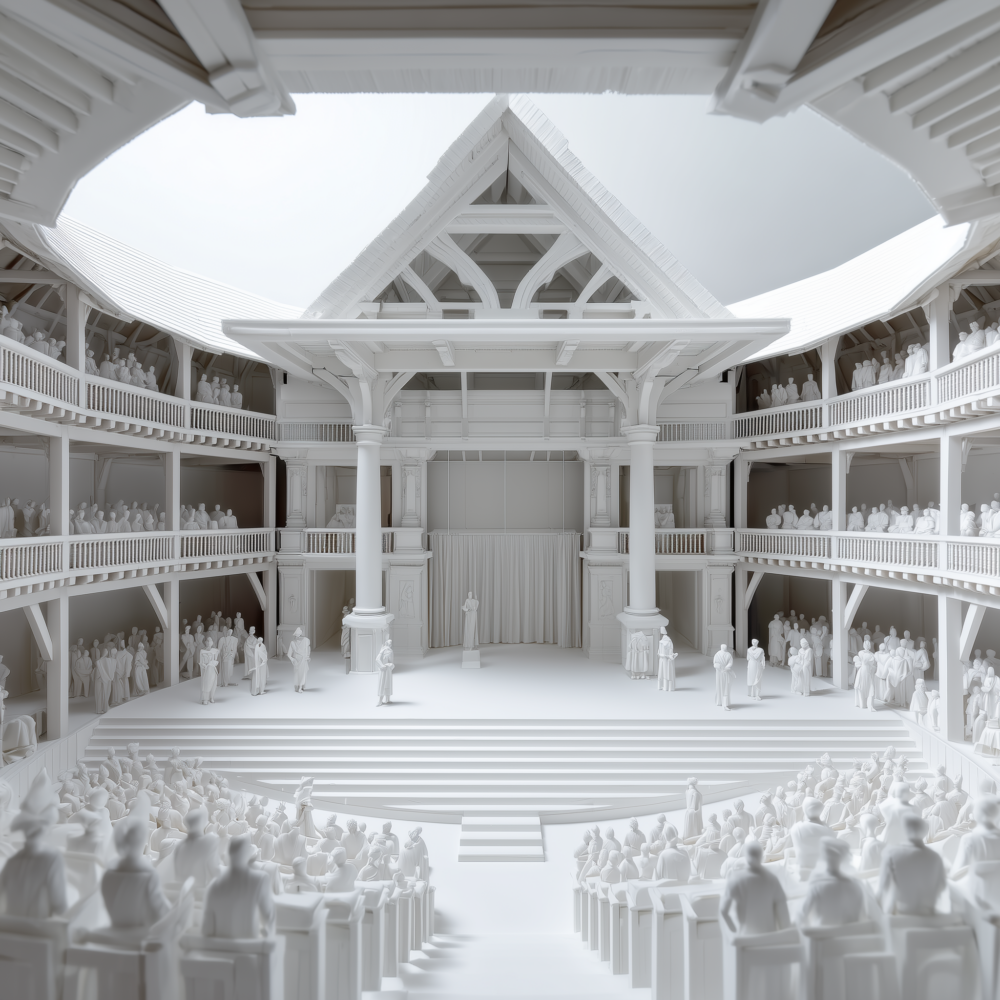
The Influence of Auditorium Architecture on the Emotional Perception of a Theatrical Performance
Theater is often discussed through scripts, actors, direction, lighting, and costume design, but the architecture of the auditorium plays an equally important role in shaping how a performance is felt. Before a single line is spoken, the audience has already entered a spatial system that affects attention, intimacy, tension, comfort, and expectation. The size of the room, the slope of the seating, the distance from the stage, the shape of the ceiling, the visibility of balconies, the presence of ornament, even the way sound travels through the air all help determine the emotional atmosphere in which a production is received.
This influence is easy to underestimate because architecture tends to disappear once the performance begins. Audience members focus on the stage and rarely think consciously about the room surrounding them. Yet that room is constantly guiding perception. It tells spectators whether what they are about to experience should feel grand or personal, ceremonial or immediate, formal or unstable. A production performed in a deep proscenium house with red velvet, gold ornament, and layered balconies does not feel emotionally identical to the same production staged in a black box theater with flat walls and close seating. The text may be unchanged, but the emotional frame is different.
Space Shapes Emotional Distance
One of the clearest effects of auditorium architecture is the way it controls emotional distance between audience and performance. In a large traditional theater, the viewer is often made aware of scale. The height of the room, the width of the stage opening, and the visual depth of the house create a sense of occasion. This can intensify spectacle, ritual, and grandeur. Musicals, epics, and productions with strong visual composition often benefit from such a setting because the room enlarges the event. The spectator does not simply watch a story. The spectator feels placed inside a public ceremony of watching.
Smaller auditoriums create a different emotional condition. In an intimate space, the audience is closer to the actors, and subtle facial expression, vocal fragility, and physical hesitation become more legible. This kind of architecture supports vulnerability. A quiet pause carries more weight when the audience can feel the human scale of the performer. In such a room, emotional discomfort can also become stronger. A scene of grief, confession, or moral tension may feel harder to escape when the spectator is seated only a short distance away. Architecture, in this sense, determines not only what the audience sees, but how protected the audience feels from what it sees.
The Relationship Between Sightlines and Immersion
Sightlines are another crucial architectural factor. A well-designed auditorium allows the audience to follow action without strain, confusion, or constant visual obstruction. When spectators can see clearly, emotional engagement tends to deepen because attention flows more easily. They do not need to fight the room in order to connect with the performance.
Poor sightlines weaken this connection. If parts of the stage are hidden, if columns interrupt vision, or if a spectator has to lean repeatedly to understand what is happening, emotional continuity breaks. Theater depends heavily on rhythm, and architecture can either preserve or interrupt that rhythm. Even small obstructions matter. Missing a facial reaction, a physical gesture, or the spatial relationship between characters can reduce the force of a scene. Emotional investment often depends on visual confidence.
Immersion is not simply a product of technology or directing style. It is often built by the room itself. A horseshoe-shaped auditorium, for example, can create a layered sense of spectatorship, where audience members remain aware of each other as part of the event. A black box can erase theatrical hierarchy and make the performance feel rawer and less protected. A thrust stage reduces separation and invites stronger psychological involvement. Each spatial arrangement alters the emotional contract between stage and audience.
Acoustics and the Feeling of Presence
Sound may be the most invisible architectural force in theater. A room with warm, clear acoustics helps the audience feel that voices and sounds belong naturally to the dramatic world. When speech is intelligible and resonance is balanced, the audience relaxes into the performance. Emotional meaning travels more directly because effort is reduced. A whisper that carries properly through a room can be more powerful than a shouted line in a badly shaped space.
Acoustics also influence emotional scale. In some auditoriums, sound blooms and expands, creating richness and atmosphere. In others, it feels close and dry, which can intensify realism and tension. Neither is inherently better. What matters is the relationship between acoustics and the kind of emotional world the production wants to create. A Shakespeare tragedy may gain power from a room that gives language lift and gravity. A contemporary intimate drama may feel more effective in an acoustic environment that preserves closeness and verbal detail.
If the auditorium produces echoes, dead zones, or inconsistency across seating areas, emotional experience becomes uneven. Some viewers feel drawn in, while others work to decode speech. The architecture then stops supporting the drama and begins interfering with it. Good theater architecture allows sound to feel like part of the storytelling rather than an obstacle to it.
Ornament, Atmosphere, and Psychological Expectation
The visual style of an auditorium affects audience expectation before the performance even starts. Ornate historic theaters often create anticipation through beauty, memory, and ceremony. They suggest that what happens on stage belongs to a larger cultural tradition. This can heighten reverence and excitement. The audience arrives prepared for significance.
Modern minimal spaces create another kind of readiness. They often strip away decorative signals and focus attention on the mechanics of performance itself. This can make the experience feel more contemporary, experimental, or psychologically direct. Without the framing effect of historical ornament, the audience may feel less guided toward a specific mode of response and more exposed to the work on its own terms.
Even color and material matter. Plush textures, warm tones, wood surfaces, and curved forms can create comfort and receptivity. Hard lines, darker surfaces, or industrial austerity can produce alertness or tension. These responses are subtle, but theater is built from subtlety. The emotional reception of a performance begins long before the first cue. Architecture prepares the nervous system of the audience.
Architecture as Part of the Performance Itself
In the strongest theatrical experiences, the auditorium does not function as a neutral container. It becomes part of the performance’s emotional machinery. A comedy can feel more buoyant in a room that encourages collective laughter to spread easily. A tragedy can feel more overwhelming in a room whose scale emphasizes human smallness. A politically charged production may gain intensity in a space that reduces distance and makes the audience feel implicated rather than safely removed.
This is why directors and designers often adapt productions differently depending on venue. The same staging choice may feel intimate in one room and distant in another. The same silence may feel charged in a compact space and diluted in a broad one. Architecture changes tempo, emphasis, and emotional weight. It does not merely host performance. It reshapes it.
The influence of auditorium architecture on emotional perception is therefore not decorative or secondary. It is structural. The room teaches the audience how to watch, how to listen, how close to feel, and how much emotional pressure to absorb. Theater lives not only in scripts and actors, but in spatial relationships that govern human attention and response.
When audiences remember a great performance, they often remember more than they realize. They remember the hush of the room, the closeness or distance of the stage, the sound of voices in the air, the feeling of being held inside a particular kind of space. That memory is never created by performance alone. It is created by the meeting of performance and architecture. And in that meeting, the auditorium becomes one of the most powerful emotional instruments in the theater itself.